May 20, 2026
The Flip Phone is Back. Here's Why it Matters.
As more people step back from smartphones in favor of simpler devices, local governments must shift toward clearer, more accessible communication methods like text messaging to effectively reach their entire community.
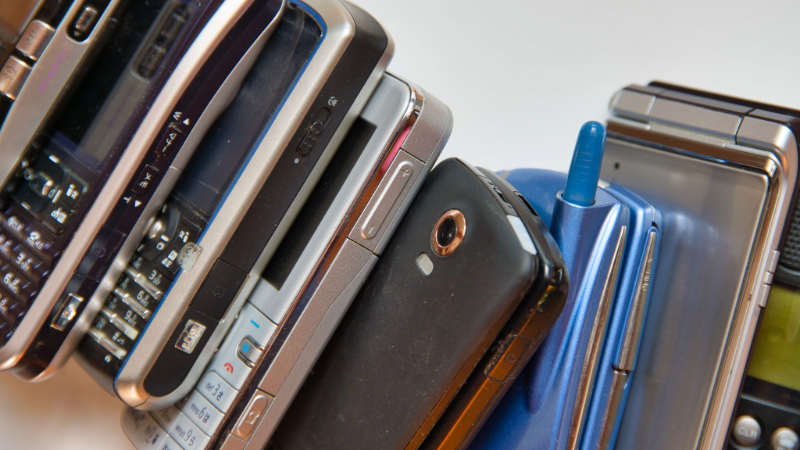
When was the last time you spent an entire day away from your smartphone? If the answer is “on last year’s annual camping trip”, you might want to consider participating in a growing global trend and trade in your smartphone for a “dumbphone.”
It may sound surprising, but as the world becomes increasingly reliant on technology, more individuals are intentionally stepping away from personal smart devices. The return of basic phones with simple calling and texting capabilities is not just nostalgia. It illuminates a deeper shift in how people want to interact with technology in 2026. For local governments, this shift has serious implications that need to be taken into consideration. This trend challenges long-standing communication strategies and highlights the need for more accessible, inclusive solutions.
Rethinking Relationships with Technology
Smartphones have been commonplace in the United States for about 15 years. For many Gen Z and Millennial young adults, smartphones have been stealing their attention since the time they could walk. Now, this particular group is reconciling with the mental consequences of a lifetime of smartphone reliance and realizes the need for a change.
The average smartphone owner picks up their phone 85 times a day. The urge to check our phones is not just habitual. Data from the New York Institute of Technology concludes that smartphone usage causes the same chemical reaction in the brain as drugs and alcohol. Studies also show that even if a phone is not being used, simply being in the same room as our smartphones reduces memory capacity and problem-solving ability. Though built to connect us, constant and prolonged connection to smartphones results in feelings of loneliness, depression, anxiety, and decreased cognition.
From 2021 to 2024, flip phone sales among 18–24-year-olds increased by 148% and overall smartphone usage dropped by 12%. The movement to simplify phone usage may have been popularized by younger generations, but the desire to untangle humanity’s deep cultural reliance on technology spans across the globe regardless of demographics.
In part, this trend is due to the wide variety of dumbphone options available. Some, like the Light Phone or Punkt, are intentionally minimal and focus only on calling and basic flip phone texting. Others, like certain Nokia models, add a few practical features while still avoiding the complexity of smartphones. Across different flip phone types, the common goal is the same: reducing distractions while still staying connected when it matters.
The Communication Gap Is Growing
Local governments exist to serve everyone in their community, including residents who are fully connected and those who are intentionally stepping back from technology. However, many municipal community engagement specialists still rely heavily on tools that assume constant connectivity. Email, mobile apps, and social media typically dominate outreach efforts, causing a messaging gap for those who do not subscribe to these communication methods.
Residents without smartphones likely still have access to a desktop computer that allows them to check email and social media platforms. Even so, email requires residents to actively check crowded inboxes, often hiding urgent community notifications. Social media post visibility depends on algorithms and user participation, making the platform perfect for event advertising, but unsuited for emergencies or urgent alerts.
Smarter Plans for "Dumber" Phones
The return of simpler devices highlights an important lesson. More technology does not always lead to better communication. Residents do not want to download another app or remember another password just to stay informed. They want clear, accessible information that fits into their daily lives and meets them where they are.
Text messaging removes barriers rather than adding them. It reaches residents on nearly any device, requires no additional effort from the user, and delivers information in a format that is easy to receive and act on.
The resurgence of basic phones is not just a trend; it is a signal. People are rethinking how they use technology and choosing tools that support their well-being rather than compete for their attention.
For local governments, this shift presents a clear direction forward. Resident communication strategies must evolve to reflect how residents are actually living, not how technology once expected them to behave. Relying solely on email, apps, and social media leaves gaps that will only continue to grow as more people step away from constant connectivity.
Text messaging offers a simple, reliable way to close that gap. It reaches residents on nearly any device, requires no additional effort from the user, and delivers information in a format that is easy to receive and act on. As devices get simpler, communication should follow. The communities you serve are already changing how they connect. Meeting them with clear, accessible, and inclusive communication is no longer optional. It is essential.

Meet the Author
Emma Conway is a Marketing Communications Manager with TextMyGov. She is a graduate of the University of Utah and has been writing for TextMyGov since 2024. Emma loves hiking and birdwatching in the nearby mountains.